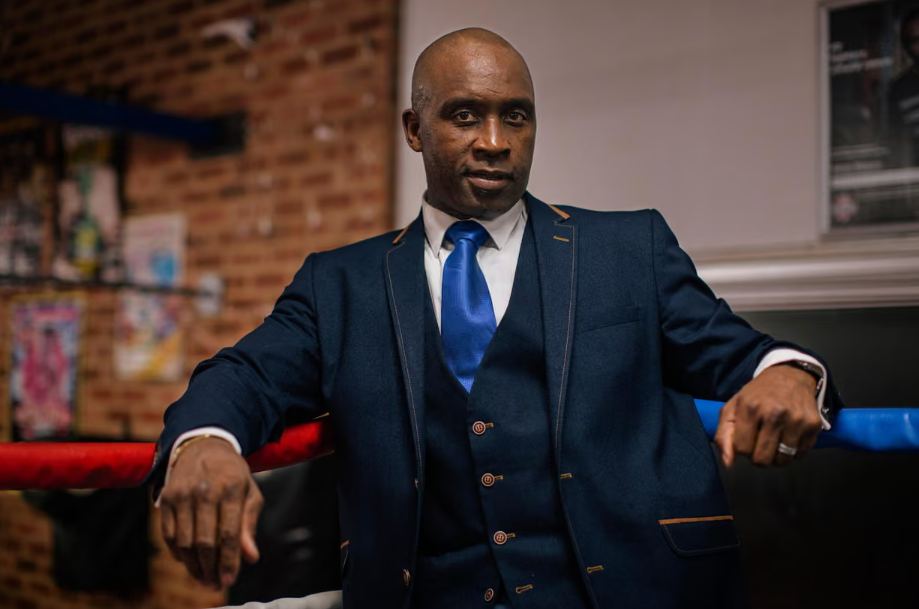
Nigel Benn was born on 22 January 1964 in Ilford, East London, where he grew up in a working-class environment that helped shape his tough mentality and aggressive fighting spirit. Life in East London during his upbringing was not easy, and Benn was exposed early to the realities of street culture, discipline challenges, and limited opportunities. These circumstances played a major role in developing the resilience that would later define his boxing career, both physically and mentally.
Before fully committing to boxing, Benn served in the British Army, an experience that gave him structure, discipline, and physical conditioning. While stationed in Germany, he began to take boxing more seriously, discovering a natural ability for power punching and aggression in the ring. Although he did not come through a highly decorated amateur system, his raw talent and fighting instinct stood out immediately. This early combination of toughness, military discipline, and natural power laid the foundation for his future success as a professional boxer and world champion.
Amateur Beginnings and Turning Professional
Nigel Benn did not follow the traditional long amateur path that many elite boxers take. Instead, his amateur experience was relatively limited, but it gave him enough grounding to understand the basics of movement, timing, and fighting under pressure. What stood out most during this phase was not technical refinement, but his natural aggression and knockout power, which quickly separated him from more conventional fighters. Even in early bouts, he showed a tendency to push forward relentlessly and look for stoppages rather than rely on scoring points.
When Benn turned professional in 1987, he entered the boxing scene with an aggressive style that immediately caught attention. He began his pro career with a series of fast and decisive knockouts, building a reputation as a dangerous contender who could end fights at any moment. Promoters and fans quickly took notice of his entertaining approach, and his popularity grew rapidly in Britain. This early professional momentum set the stage for his rapid rise through the rankings and eventual world title opportunities.
Rise Through the Rankings in Britain
As Nigel Benn continued his professional career, he quickly climbed the British and European rankings due to his explosive knockout record and relentless fighting style. Each fight added to his reputation as a dangerous contender, and he became known for overwhelming opponents with pressure from the opening bell. His ability to finish fights early meant he was often avoided by other rising contenders, which only increased demand for his bouts and accelerated his path toward world title contention. Benn’s aggressive approach, combined with growing experience, made him one of the most feared middleweight prospects in Britain during the late 1980s.
Winning the WBO Middleweight Title
Nigel Benn reached the peak of his early career when he captured the WBO middleweight title in 1990 after defeating Doug DeWitt in a dramatic and physically intense contest. The fight showcased Benn’s trademark aggression, as he pressed forward relentlessly and used his power to break down his opponent. Despite facing adversity during exchanges, Benn’s determination and punching strength ultimately secured him a stoppage victory, earning him his first world championship and establishing him as a major force in global boxing.
Winning the title marked a turning point in Benn’s career, transforming him from a feared contender into a recognised world champion. It also increased expectations, as fans and promoters began to view him as one of Britain’s leading fighters. However, holding the title brought new challenges, as he was now targeted by elite-level opponents eager to take his belt. This period tested Benn’s ability not just as a puncher, but as a champion capable of handling pressure at the highest level.
Rivalry with Chris Eubank
The rivalry between Nigel Benn and Chris Eubank became one of the most famous in British boxing history, defined by intense personal tension and two unforgettable fights. Their first encounter in 1990 for the WBO middleweight title ended in a stoppage loss for Benn after a brutal back-and-forth battle, while the rematch in 1993 at super-middleweight produced a dramatic split draw that left fans divided and calling for a decisive third fight that never fully materialised. The contrast in styles—Benn’s aggression versus Eubank’s precision and defensive control—made their clashes compelling, and both fights are still widely discussed as defining moments in British sport.
Super-Middleweight Dominance and WBC Title
After moving up to super-middleweight, Nigel Benn quickly re-established himself as one of the most dangerous fighters in the division, carrying his knockout power into a new weight class where he continued to overwhelm opponents with relentless pressure. This period marked a resurgence in his career, as he adapted to stronger opposition while maintaining his aggressive identity. Benn’s performances showed improved maturity, blending his natural aggression with better timing and fight management, allowing him to compete at an even higher level on the world stage.
His career reached another peak when he won the WBC super-middleweight title in 1992 after defeating Mauro Galvano. The victory confirmed his status as a two-weight world champion and solidified his place among boxing’s elite fighters of the era. As champion, Benn defended his reputation as a fearless competitor, taking on top challengers and continuing to deliver exciting, high-intensity fights that reinforced his popularity with fans and his standing in British boxing history.
The Gerald McClellan Fight and Its Impact
The fight between Nigel Benn and Gerald McClellan in 1995 is remembered as one of the most brutal and tragic contests in boxing history. Benn entered the bout as WBC super-middleweight champion, but McClellan was widely regarded as one of the most dangerous punchers in the sport. The fight was intensely violent from the opening rounds, with both fighters trading heavy shots and neither willing to back down. Benn ultimately secured a dramatic tenth-round stoppage after both men had endured extreme punishment, in what became a defining moment of his career.
Retirement and Life After Boxing
Nigel Benn officially retired from professional boxing in 1996, stepping away after a career defined by explosive victories, world titles, and physically demanding wars in the ring. His decision came after years of intense competition at the highest level, where the physical and emotional toll of fighting elite opponents began to accumulate. Retirement allowed Benn to move away from the constant pressure of training camps, weight management, and the dangers of professional boxing, marking the end of one of Britain’s most exciting careers in the sport.
In life after boxing, Benn focused on personal development, public speaking, and maintaining a presence within the boxing community. He occasionally returned to the spotlight for exhibition events and media appearances, sharing insights about his career and experiences. Over time, he also became more reflective about the impact of his fights, especially the McClellan bout, and spoke openly about the emotional weight carried by professional fighters. His post-boxing life has been shaped by both his legacy and his willingness to engage with the realities of the sport he once dominated.
Legacy of Nigel Benn in British Boxing
Nigel Benn remains one of the most influential and exciting figures in British boxing history, remembered for his explosive punching power, fearless attitude, and ability to deliver unforgettable fights. His career helped define an era of British boxing in the 1990s, particularly through his rivalries and world title victories across two weight divisions. Benn’s aggressive style made him a fan favourite and ensured that his fights were consistently high drama, often ending in dramatic knockouts or intense battles that are still discussed today.
Conclusion
Nigel Benn built a career defined by power, courage, and relentless ambition, rising from a modest background in East London to become a two-weight world champion. His journey through boxing was not just about winning titles, but about the way he fought—always aggressively, always aiming for a decisive finish, and always willing to face the toughest opponents available. From his early professional knockouts to his world title victories, Benn established himself as one of the most entertaining and respected fighters of his era.
FAQ’s
1. Who is Nigel Benn?
Nigel Benn is a British former professional boxer and two-weight world champion, known for his aggressive fighting style and knockout power.
2. What was Nigel Benn’s boxing record?
He retired with 42 wins, 5 losses, and 1 draw, with most of his victories coming by knockout.
3. What titles did Nigel Benn win?
He won the WBO middleweight title and the WBC super-middleweight title during his career.
4. Why is Nigel Benn famous?
He is famous for his explosive style, his rivalry with Chris Eubank, and his brutal fight with Gerald McClellan.