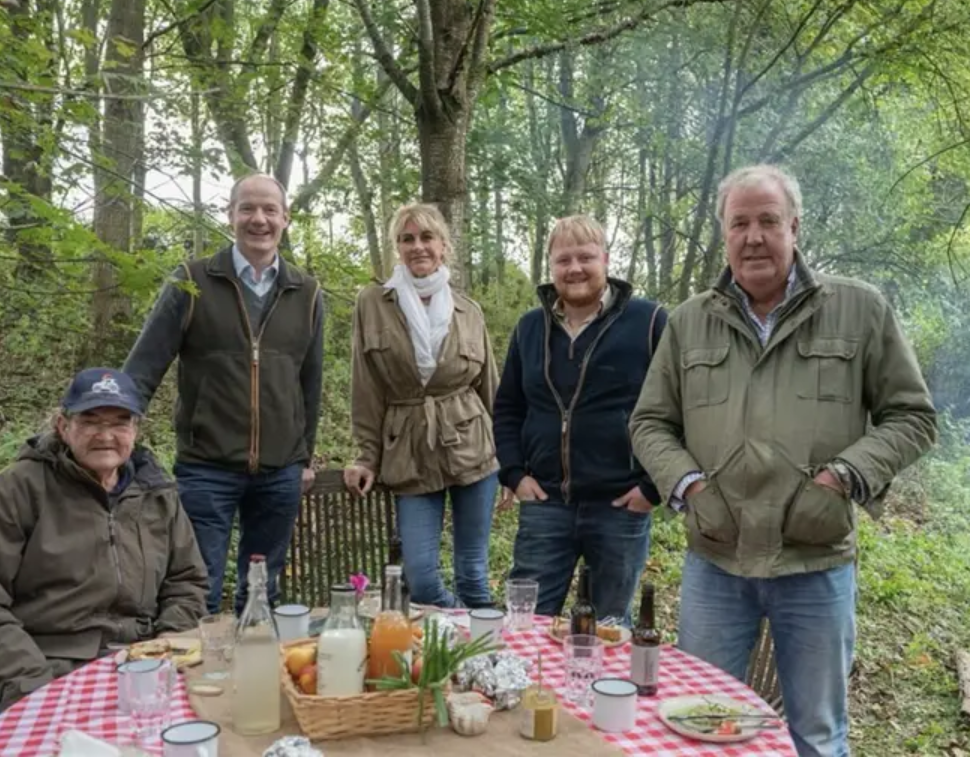
Charlie Ireland is a British rural land agent and chartered surveyor known for his expertise in farm management, estate planning, and agricultural consultancy across the UK. He works closely with landowners to help them make informed decisions about how to run and develop their farms in a way that balances profitability, sustainability, and regulatory compliance. As Managing Partner at Ceres Rural, he plays a key role in advising on everything from crop planning and land use strategy to long-term estate investment and diversification opportunities. Charlie Ireland became widely recognized by the public through his appearance on Clarkson’s Farm, where he is seen providing structured, professional guidance to Jeremy Clarkson on managing Diddly Squat Farm. His approach is rooted in practical economics and UK agricultural policy, often focusing on risk management and long-term viability rather than short-term experimentation. This makes him a representative figure of modern rural consultancy, where farming decisions are increasingly driven by data, regulation, and financial planning rather than tradition alone.
Role of Charlie Ireland on Clarkson’s Farm
Charlie Ireland plays the role of a professional rural advisor on Clarkson’s Farm, where his main responsibility is to guide Jeremy Clarkson through the complex realities of running a working agricultural business. The show highlights the contrast between Clarkson’s creative, often experimental ideas and Charlie’s structured, regulation-focused approach. His advice is grounded in UK farming law, financial sustainability, and practical land management, ensuring that every decision made on Diddly Squat Farm is both legally compliant and economically realistic. Rather than simply approving or rejecting ideas, he breaks down the risks, costs, and regulatory barriers so that Clarkson can understand the real-world consequences of each proposal.
In addition to providing on-the-spot advice, Charlie Ireland also represents the broader role of rural land agents who act as intermediaries between farmers and the increasingly complex agricultural system in the UK. He helps translate policy changes, subsidy rules, and planning restrictions into actionable farm strategies. On the show, this often involves reviewing diversification plans such as farm shops, tourism ventures, or new crop strategies and assessing whether they are viable. His calm and analytical presence serves as a stabilizing force, ensuring that enthusiasm is balanced with long-term business thinking, which is essential for maintaining the farm’s sustainability.
Principles of Rural Estate Management
Charlie Ireland approaches rural estate management with a strong emphasis on long-term sustainability, financial stability, and responsible land use. His work is based on the idea that a farm or estate is not just an agricultural space but a complex business that must balance environmental care, regulatory compliance, and economic performance. This means carefully planning how land is used, whether for crops, livestock, diversification projects, or conservation initiatives, while ensuring that each decision supports the overall viability of the estate. A key principle in his approach is risk management—anticipating potential financial, environmental, or legal issues before they arise and structuring farm operations to minimize exposure to those risks.
Farm Business Strategy and Diversification
Charlie Ireland places strong emphasis on treating farms as structured business enterprises rather than purely traditional agricultural operations. His strategy focuses on ensuring that every aspect of a farm contributes to financial sustainability, whether through core farming activities or additional income streams. In modern UK agriculture, where profit margins can be tight and unpredictable, this approach is essential. He evaluates farm operations by looking at cost efficiency, productivity, and long-term return on investment, ensuring that resources such as land, labor, and equipment are used in the most effective way possible. His advice often includes careful budgeting, scenario planning, and risk assessment to help farm owners make informed decisions that protect financial stability.
Diversification is another central pillar of his approach, especially in contexts like Clarkson’s Farm, where unconventional ideas often emerge. Charlie Ireland assesses opportunities such as farm shops, tourism ventures, hospitality services, and alternative crop production to determine whether they are viable within planning laws and market conditions. While diversification can significantly boost farm income, he also highlights the importance of feasibility, regulatory approval, and long-term maintenance costs. His role is to ensure that diversification is not just exciting but also sustainable, scalable, and aligned with the overall farm strategy, helping rural businesses adapt to evolving economic pressures while maintaining operational balance.
Navigating UK Agricultural Policy and Subsidies
Charlie Ireland works extensively within the framework of UK agricultural policy, where rules, subsidies, and environmental regulations play a major role in shaping how farms operate. His expertise lies in interpreting complex policy changes and translating them into practical decisions for landowners and farm businesses. With government support schemes and environmental land management programs frequently evolving, farmers must constantly adjust their strategies to remain compliant and financially stable. Charlie helps bridge this gap by advising on eligibility, application processes, and long-term implications of subsidy reliance versus independent income generation, ensuring that estates are not overly exposed to policy uncertainty.
Case Study: Diddly Squat Farm Management Approach
Charlie Ireland’s work on Clarkson’s Farm becomes most visible through his involvement with Diddly Squat Farm, where theoretical rural consultancy is tested against real-world unpredictability. The farm presents a unique case study because it combines traditional agriculture with high-profile diversification attempts driven by media attention and entrepreneurial experimentation. In this setting, Charlie’s role is to assess each idea not only for its agricultural viability but also for its compliance with UK planning regulations and its long-term financial sustainability. Whether it is crop selection, infrastructure development, or retail expansion, his input ensures that decisions are grounded in practical reality rather than short-term enthusiasm.
At Diddly Squat Farm, Charlie Ireland consistently highlights the importance of aligning ambition with regulatory and economic constraints. Many proposed initiatives require planning permission, significant capital investment, or ongoing operational costs that may not be immediately obvious. His approach involves breaking down these proposals into measurable factors such as return on investment, risk exposure, and administrative feasibility. This case study demonstrates how modern farm management is rarely straightforward and often requires balancing creativity with strict regulatory frameworks. Through this lens, Charlie’s advisory work illustrates the broader challenges faced by rural estates attempting to innovate while remaining financially and legally stable.
Challenges in Modern Agricultural Consultancy
Charlie Ireland operates in a sector that is becoming increasingly complex due to rapid changes in agricultural policy, market volatility, and environmental expectations. One of the main challenges in modern agricultural consultancy is balancing the often conflicting priorities of profitability, sustainability, and regulatory compliance. Farm businesses are under pressure to remain economically viable while also meeting stricter environmental standards and adapting to evolving government subsidy systems. This creates a situation where advisors like Charlie must constantly reassess strategies, sometimes revising long-term plans in response to external changes that are outside the control of landowners or farm managers.
Conclusion
Charlie Ireland represents the modern reality of rural estate management, where farming is no longer guided solely by tradition but shaped by regulation, economics, and strategic planning. Through his role on Clarkson’s Farm and his professional work in rural consultancy, he demonstrates how agricultural success depends on balancing ambition with practical constraints. His approach emphasizes long-term thinking, careful risk assessment, and structured diversification, all of which are essential for keeping farms financially and operationally sustainable in a changing UK agricultural landscape. Ultimately, his work highlights that effective farm management is as much about business strategy and policy awareness as it is about working the land.
FAQs
1. Who is Charlie Ireland?
Charlie Ireland is a British rural land agent and chartered surveyor specializing in farm and estate management, known for his role on Clarkson’s Farm.
2. What does Charlie Ireland do on Clarkson’s Farm?
He advises Jeremy Clarkson on farm operations, planning, diversification, and regulatory compliance to ensure the farm remains viable.
3. What company does Charlie Ireland work for?
He is a Managing Partner at Ceres Rural, a UK-based agricultural consultancy firm.
4. Why is Charlie Ireland important in farming consultancy?
He helps bridge the gap between agricultural policy, business strategy, and practical farm management in modern UK farming.